Introducing Predictive Risk Scores: see which balances need attention before they are past due
Every student accounts office knows the pattern. A balance looks fine in September. An installment slips in October. By the end of the term, it’s a past-due account, a registration hold, and a student who may not come back. By the time an account shows up on an aging report, the best moment to help that student has usually passed.
Today we’re launching Predictive Risk Scores in Meadow so your team can see that moment coming well in advance.
What is Risk Scoring?
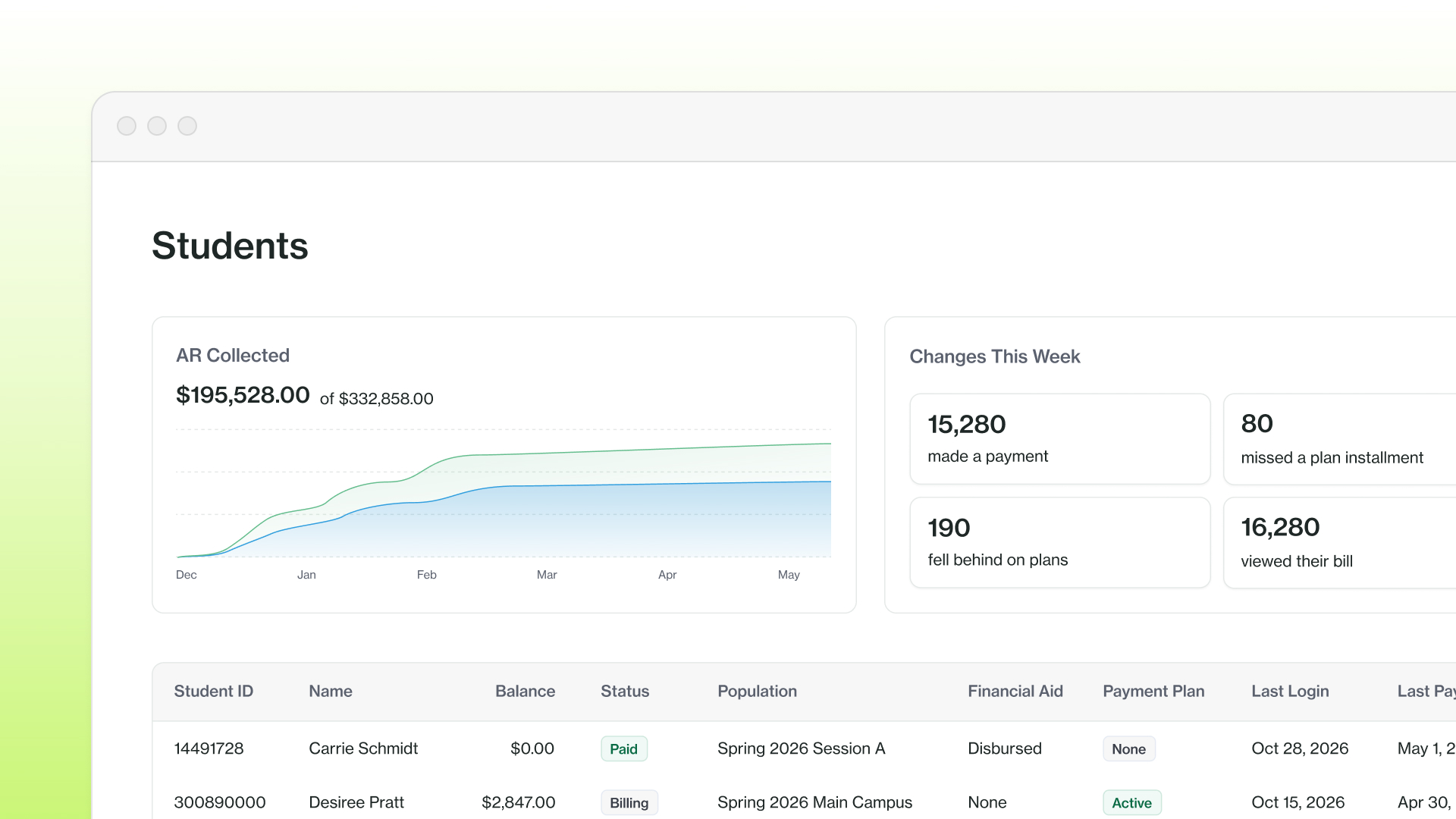
Every student with a balance now has a risk rating based on how likely they are to fall behind on what they owe this term. It sits next to the balance, status, financial aid, and payment plan columns you already use, so there’s nothing new to learn or log into.
Where you’ll see Risk Scores?
- Student list: A new Risk column covers each student. Hover over any rating for a one-line explanation of why the student landed there.
- Risk filter: Pull every high-risk student for a term in a couple of clicks, then export the list so you can do targeted outreach.
- Changes This Week: Your dashboard now shows a running count of high-risk students, alongside payments, logins, and missed installments.
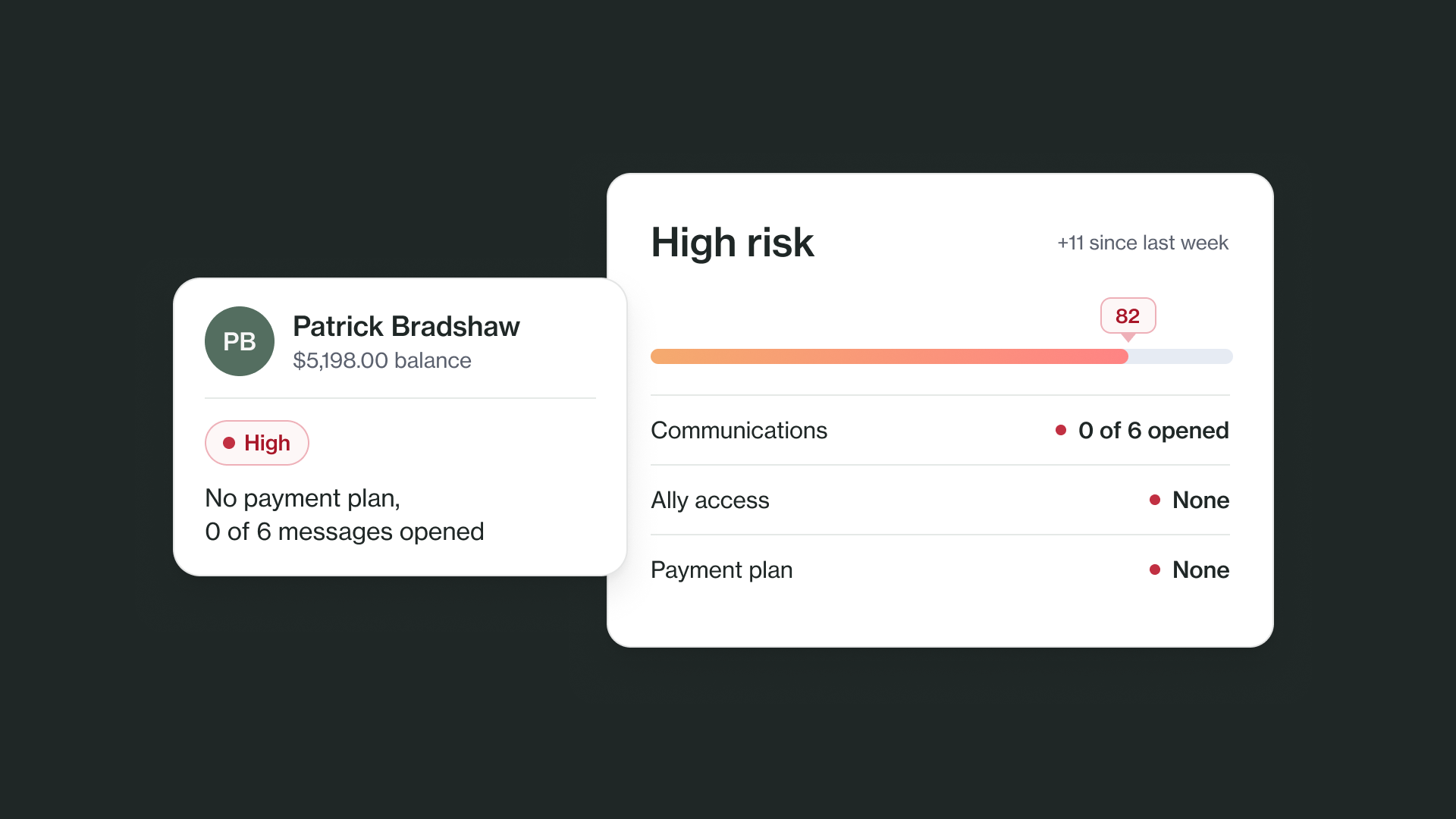
- Student profile: Each profile shows the full score and every factor behind it.
How Risk Scores work
Meadow already sees a great deal of data about each account. This includes how students pay, when they engage, and whether or not they have paid on time in past terms. Predictive Risk Scores bring those signals together into one number. On the student profile, each factor is marked green when it works in the student’s favor and red when it raises risk:
- Payment plan: whether students are on a plan, are in good standing, and are on autopay.
- Balance: what is still outstanding.
- Account status: whether it is current or overdue.
- Engagement: the date of their last login, Ally access, and whether they open and click your messages.
- History: whether prior plans were completed, a full payment history and reversals, and past delinquency.
- Financial aid: whether aid is on file this term.
- Deliverability: whether emails and texts are reaching them.
When a student is flagged with a high Risk Score, your team can see exactly why. This triggers a specific conversation instead of a generic reminder for those students.
Here’s an example. A student with $5,600 outstanding who hasn’t logged in for 53 days might look like a problem if that was the only data point you had. Their profile tells a different story: autopay is on, the plan is in good standing, they have completed three prior plans cleanly, and they’ve made 18 successful payments. They score Low risk, so your team can spend its time elsewhere.
What Risk Scoring changes for your office
- Earlier outreach: You can reach students before they miss an installment. This allows you to suggest a payment plan or an aid conversation where those can fix a potential issue.
- Less noise: Stop chasing students who are likely to pay.
- A forward-looking number for leadership: Alongside what’s already past due, you can show how much of this term’s receivables sits with high-risk students and what your team is doing about it.
Your office has always known which students worried you. Now you’ll know sooner, and you’ll have a reason behind each name.
Available now
Predictive Risk Scores are live in every Meadow account today at no additional cost. Open your student list and sort by Risk to see where your students stand this term. If you’d like a walkthrough, please reply to this email or reach out to your Customer Success Manager, and we’ll set one up. We can’t wait to hear what you think.